Finding the Right Used Work Truck: Build a Better Search Brief
A useful work-truck search starts with the job, not just a badge. Define the body, load requirements, drivetrain, budget, and inspection priorities before comparing vehicles.
A truck can look right in a listing and still be wrong for the work you need it to do. A service body may not have the storage layout you want. A box truck may not provide the access your deliveries require. Even a familiar model name does not tell you how a particular vehicle was equipped or what condition its equipment is in.
The way to make a used work-truck search more useful is to define the job before collecting listings. RPM Automotive Advisors is an independently owned dealership based in Buffalo, New York, serving customers nationwide. We buy, sell, and help find all types of vehicles, including specialty trucks. A clear search brief gives us a practical starting point when your next purchase needs to serve a business rather than simply a commute.
Describe the work before naming the truck
Start with what a normal working day involves. Are you carrying tools to service calls, moving materials, or making deliveries? How many people ride along? Where does the truck park, and what sites must it access? Explain those needs before narrowing the search to a particular badge or model year.
Write down what cannot change and what can. A specific body type might be essential, while the exterior color is flexible. An automatic transmission may be important to your drivers, while the model year has more room for compromise. Separating requirements from preferences makes it easier to evaluate a listing without being distracted by something that looks appealing but does not solve the problem.
Make the body and equipment part of the search
For a service truck, think about the tools and supplies you carry, which compartments need to lock, and how often you access them. Request useful photographs of the storage areas rather than relying only on an exterior overview. Ask about the condition of doors, latches, mounts, and any installed equipment.
For a box or specialty truck, explain the cargo and loading method. Confirm the dimensions and access arrangements you actually need. If the application calls for refrigeration, a liftgate, or other specialized equipment, make that a separate requirement with its own inspection questions. The truck's model year and odometer reading are not enough to establish the condition or performance of that equipment.
An existing body can be useful, but do not assume it matches your operation just because it resembles another truck you have used. Before treating a modification as an easy fix, ask a qualified installer or upfitter about compatibility, scope, and cost.
Separate the truck's weight rating from what you need to carry
Bring a realistic description of the load: people, tools, materials, and equipment carried during a typical job. Avoid substituting a vague request for a heavy-duty truck when the important question is whether the actual vehicle can accommodate your intended use.
Ford's 2023 towing guide explains GVWR and where to find it on the vehicle's certification label. We use that guide for general definitions, not to assign a capacity to an older truck. That is a rating for the fully loaded vehicle, not an amount of cargo you can add without accounting for the truck itself.
Manufacturer maximum-capacity headlines should not be assigned to an individual used truck. Configuration and installed equipment matter; Ford Pro's chassis-cab guidance also qualifies carrying capacity by accessories and configuration. Ask for the relevant labels and documentation, and have a qualified commercial-vehicle specialist confirm the limits for the truck as equipped. If towing is part of the job, raise that separately instead of treating carrying capacity and trailer capacity as interchangeable.
Set a budget for the purchase and the work still needed
A useful budget includes more than the advertised price. Consider an inspection, any repairs identified, tires, and changes needed to make the vehicle fit your operation. Ask for written purchase figures so you can distinguish the vehicle price from other transaction costs.
Also explain your timing. A vehicle that needs evaluation or repair may be a different proposition for a business that can wait than for one trying to replace equipment immediately. Neither a running engine nor an attractive asking price establishes that a truck is ready for your work.
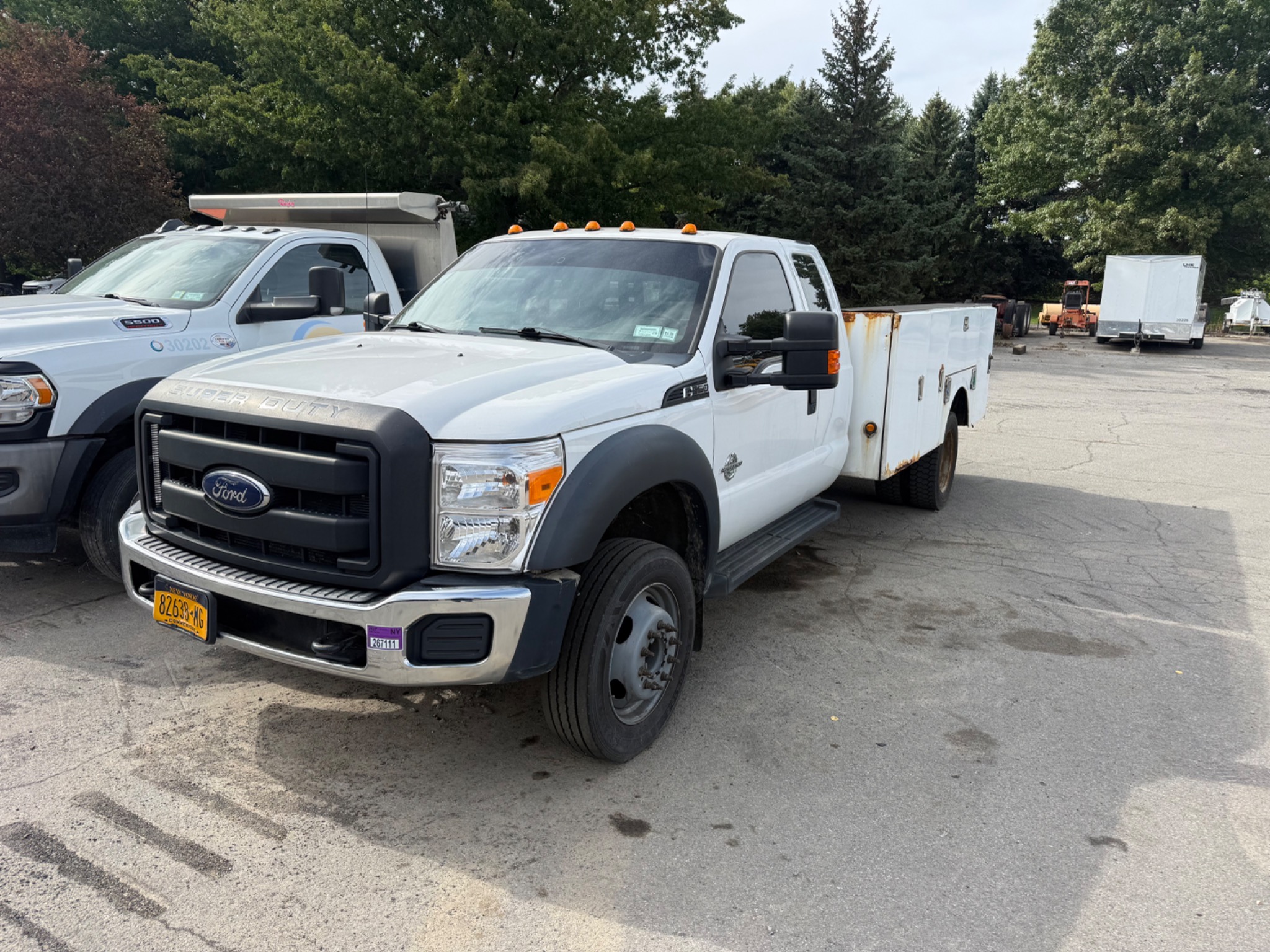
Our 2016 Ford F-550 service-truck listing, pictured here, illustrates why that distinction matters. The listing states that it runs and drives but may require additional work, including possible engine resealing. Those disclosures are part of the buying decision, not details to overlook because the truck has a service body. Review the current listing and arrange an appropriate inspection before considering it for a job.
Ask for evidence, not just a description
When a candidate looks promising, confirm the vehicle identity, current mileage, drivetrain, and installed body. Request available service records and ask directly about known repair needs. Include both the chassis and the work equipment in the inspection discussion.
Be specific about what needs to be checked. If compartment condition, a particular accessory, or access dimensions determine whether the vehicle will work for you, put those questions in the search brief. A qualified inspector can explain what the evaluation covers and which questions require a different specialist. Do not assume a history report or a general walk-around answers every operational question.
Give RPM a focused starting point
A concise inquiry can cover the job, required body, intended load, drivetrain and transmission preferences, budget, timeline, and acceptable repair work. You do not need every technical answer before starting a conversation. Be clear about what is known and what must be verified on any candidate.
Need a truck that is not in our inventory? Use our personalized vehicle-finding service to describe your requirements, or contact RPM Automotive Advisors at (716) 989-7077. You can also browse our current inventory for available starting points. Based in Buffalo and serving customers nationwide, we help evaluate options, negotiate the deal, and work through the purchase details without promising that every request has an immediate match.
Photo: RPM's owner-supplied photograph of its 2016 Ford F-550 service truck. Its listing discloses that additional work may be needed and the engine may require resealing.
Everyday to Exotic. We Find. We Buy. We Sell.
Ready to Take the Next Step?
We're Here to Help.
Whether you're buying, selling, or just have questions — our team is available to help you navigate your next automotive decision.