Selling a Car With a Loan: What to Gather Before You Ask for an Offer
Still making payments on a vehicle you want to sell? Start with a current payoff quote, clear ownership details, and an honest vehicle summary before comparing your options.
A vehicle does not have to fit your life forever just because the loan is still open. Your commute may have changed, your family may need something different, or you may simply want to reduce the number of vehicles you own. If you are considering selling a car you are still paying for, the useful first step is not guessing what you will pocket. It is getting the right information together.
RPM Automotive Advisors is an independently owned dealership based in Buffalo, New York, serving customers nationwide. We buy, sell, and help find everything from everyday drivers and family vehicles to performance cars, exotics, and specialty trucks. Here is a practical checklist to help you start a selling conversation with a clear understanding of your vehicle and its loan.
Start with a payoff quote, not just the balance on your statement
The number displayed in your loan account is a starting point, but it may not be the amount required to close the loan on the day money changes hands. The Consumer Financial Protection Bureau's guidance on vehicles with outstanding loans explains that a payoff amount can differ from the balance shown on a statement.
Contact the lender or servicer and request the current payoff amount. Ask how long that quote is valid, what happens if payment arrives after that date, and which payment and release procedures apply. Confirm whether any applicable fees or interest are included. You do not need to understand every servicing detail immediately, but you do need to know whom to contact and which number is current.
Keep the lender's name, a contact number, and the quote's expiration date handy. Do not post full loan-account numbers, identity documents, or unredacted statements in public listings. If documentation is needed for a transaction, first establish the recipient and an appropriate private method of sharing it.
Understand equity before comparing offers
For a selling decision, compare an actual vehicle offer with the current payoff amount. If the offer is higher, that difference indicates positive equity before any other transaction costs. If the payoff is higher, the difference is negative equity: selling the vehicle for that amount does not, by itself, cover the whole loan.
An online value estimate is not the same as a purchase offer. Mileage, condition, history, equipment, and the specifics of the transaction can affect what a buyer is willing to pay. Avoid making plans around a number that has not been confirmed for your particular vehicle.
If you are replacing the car as well as selling it, separate those two decisions on paper. CFPB warns that rolling negative equity into a new loan increases the amount borrowed and the interest paid over the life of that loan. A conversation about the replacement vehicle should not obscure what happens to the existing debt. Ask for the figures and proposed terms in writing; do not assume financing or a particular payoff arrangement is available.
Check who holds the title and whether a lien is recorded
Find out where the title is held and whether the lender uses a paper or electronic title process. Review whose names appear on the ownership documents. If there is another owner, ask what participation or signatures the applicable transfer process requires rather than assuming one person can complete everything alone.
For New York vehicles, the New York DMV's title and lien status tool can help you check recorded information. Its lienholder guidance also explains the proof used to show that a lien has been satisfied. A loan being paid off and the paperwork reflecting its release are related, but they are not the same document.
Those resources describe New York procedures, not a nationwide rule. If the vehicle is titled elsewhere, check that state's motor vehicle agency and your lender's requirements. Ask who will obtain the release, what documents will be provided, and how the timing will affect the transaction before agreeing to a handover.
Prepare a vehicle summary that makes an appraisal useful
Gather the VIN, year, make, model, trim, current mileage, and recent photographs. Note meaningful equipment and modifications, and have service records available when you can. Include the number of keys, any warning lights, known repair needs, and damage that photographs might not show clearly.
Being specific is more useful than describing a vehicle as perfect. A straightforward condition summary helps keep the initial conversation grounded and gives the buyer a better starting point for evaluation. It also lets you explain what matters about the vehicle without relying on an unverified price estimate.
Do not undertake expensive repairs purely on the assumption that they will increase an offer by the same amount. Before making that decision, discuss the condition and get a clearer understanding of how the vehicle will be evaluated.
Ask how the money and documents will move
Before accepting terms, clarify the vehicle offer, the payoff figure used, any additional amount you would need to contribute, and any money expected to remain after the loan is settled. Ask who is responsible for each step and when the lender's release and ownership documents should be available.
Do not assume that a statement saying the loan will be handled means every detail is resolved. Keep copies of the agreed terms and confirm the status directly with the lender afterward. CFPB recommends checking that the old loan has been paid off after a trade-in. For a different type of sale, ask your lender how to verify completion through its own process.
Start with your vehicle details, even if you are still gathering paperwork
You can begin a useful conversation without already knowing every answer. Share the vehicle details and explain that a loan remains, then identify which payoff or title questions still need to be resolved. An initial inquiry is not a promise of a purchase offer, financing, or a specific transaction outcome.
Thinking about selling? Use RPM's Sell Your Car page to share your vehicle information, or contact our team at (716) 989-7077 to discuss the next step. If you are also looking for a replacement, browse our current inventory or ask about personalized vehicle finding. Based in Buffalo and serving customers nationwide, RPM keeps the focus on a straightforward, transparent, personal experience.
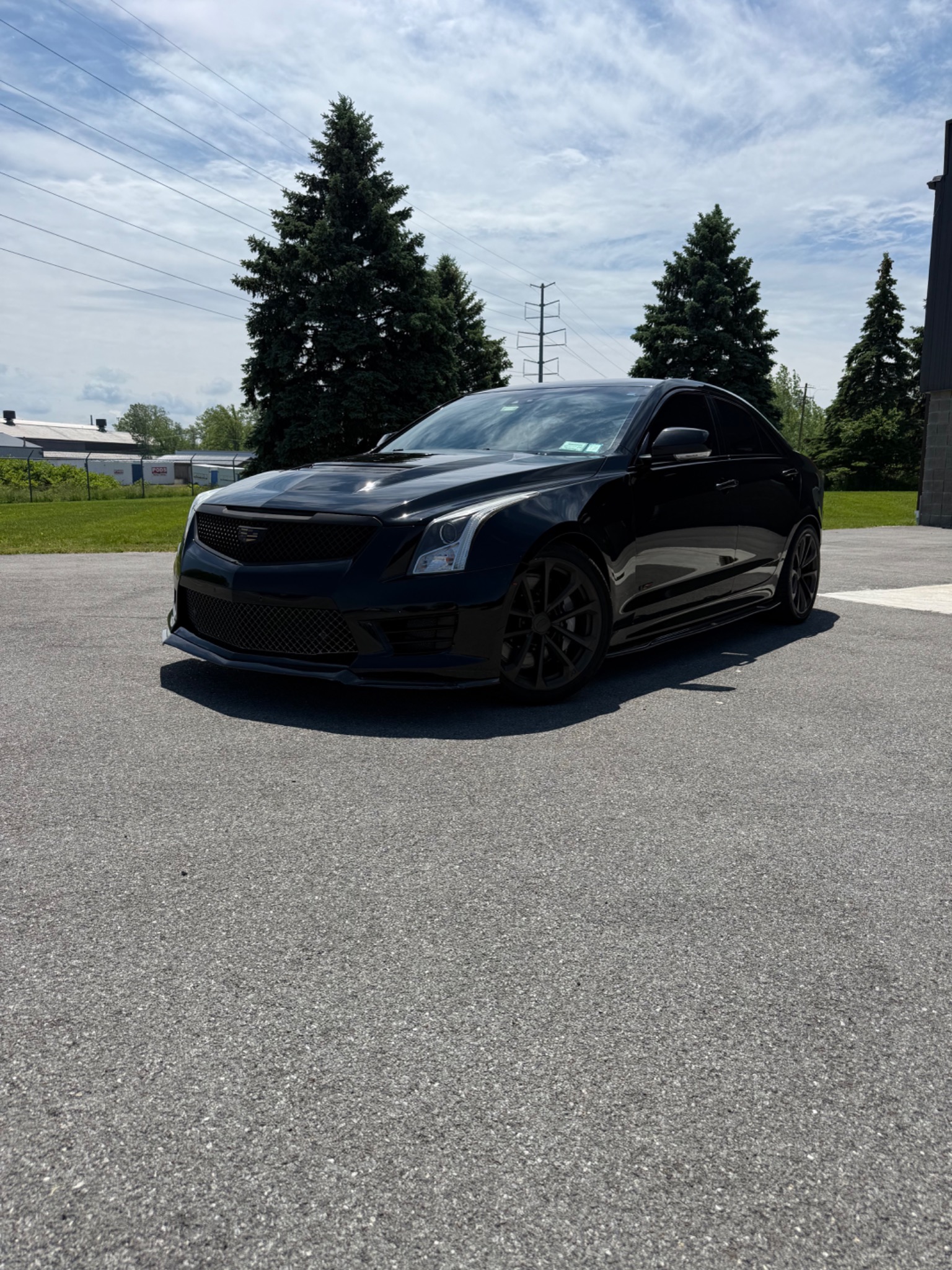
Photo: An RPM Automotive Advisors photograph of a 2016 Cadillac ATS-V. The image is illustrative and does not indicate that the pictured vehicle has an outstanding loan.
Everyday to Exotic. We Find. We Buy. We Sell.
Ready to Take the Next Step?
We're Here to Help.
Whether you're buying, selling, or just have questions — our team is available to help you navigate your next automotive decision.