Buying a Used Car for Winter: Look Beyond AWD
A drivetrain badge is only one part of a winter-ready vehicle. Learn what to ask about tires, visibility, maintenance, and your daily route before choosing your next used car.
When shopping for a used car before winter, it is easy to make all-wheel drive the first filter. That can be a useful preference, especially if your routine includes slippery starts or steep driveways. But a drivetrain badge does not tell you whether a particular vehicle has appropriate tires, clear visibility, or maintenance needs that deserve attention before cold weather.
A better comparison considers the whole vehicle and the roads you actually use. RPM Automotive Advisors is an independently owned dealership based in Buffalo, New York, serving customers nationwide. Whether you need a daily driver, family van, SUV, or specialty vehicle, the goal is to choose a suitable vehicle and understand its winter preparation needs—not assume one feature solves everything.
Start with the route you actually drive
Describe your winter routine before choosing a model. Is your commute mostly on maintained main roads, or do you regularly use rural roads and unplowed parking areas? Do you have a steep driveway? Can you postpone a trip when conditions deteriorate, or does your schedule leave little flexibility?
Also consider passengers, cargo, parking space, and comfort. A vehicle that fits your winter route still needs to work for the rest of the year. Write down which requirements are essential and which are preferences. That gives you a more useful search than selecting every AWD vehicle within a price range.
Understand what AWD does—and what it does not
All-wheel drive, commonly shortened to AWD, sends power to all four wheels. It can help a vehicle get moving in snow, but it does not inherently shorten braking distances. Tires provide the road grip needed for braking and cornering on snow and ice. Michelin's explanation of AWD and winter tires makes this acceleration-versus-braking distinction.
That does not make AWD irrelevant. It means drivetrain and tire suitability should be considered together. Ask about the specific vehicle's tire setup even when AWD is a must-have. Do not treat a confident launch from a snowy intersection as evidence that the vehicle can stop quickly on the next icy stretch.
Ask about the actual tires, not just the listing
Request the tire make, model, size, and measured tread condition. Ask whether all four tires match appropriately and whether there is uneven wear or visible damage. A photograph may show attractive wheels without revealing enough information to judge tire condition or suitability for your winter use.
If you choose winter tires, use a matched set of four appropriate for the vehicle. Transport Canada's winter-tire guidance recommends sets of four and explains that the three-peak mountain snowflake symbol indicates specified snow-traction performance for severe snow conditions. That marking is not a guarantee of grip on every icy surface, and it should not replace advice about the particular tire and vehicle.
Check pressure the right way
NHTSA's winter-driving guidance recommends checking pressure with cold tires and using the vehicle manufacturer's specification in the owner's manual or driver-door label—not the pressure printed on the tire itself. It also advises checking tread and replacing tires with uneven wear or insufficient tread. Ask a qualified tire professional to assess condition and suitable replacements when needed.
Check the winter basics before committing
During a vehicle evaluation, test the defrosters, windshield wipers, lights, and washer operation. NHTSA recommends replacing worn wiper blades, using winter washer fluid with de-icer, and having a mechanic check the battery and charging system. Its guidance also calls for checking coolant against the manufacturer's specifications.
For a used-car purchase, request an independent inspection that addresses the vehicle's overall mechanical condition, including brakes and any warning lights. Ask for findings in writing so you can distinguish immediate needs from later maintenance. This is buying advice, not a claim that a particular vehicle has already passed those checks. A heater that feels warm during a brief viewing is not a substitute for evaluating the rest of the vehicle.
A real family-vehicle example from RPM
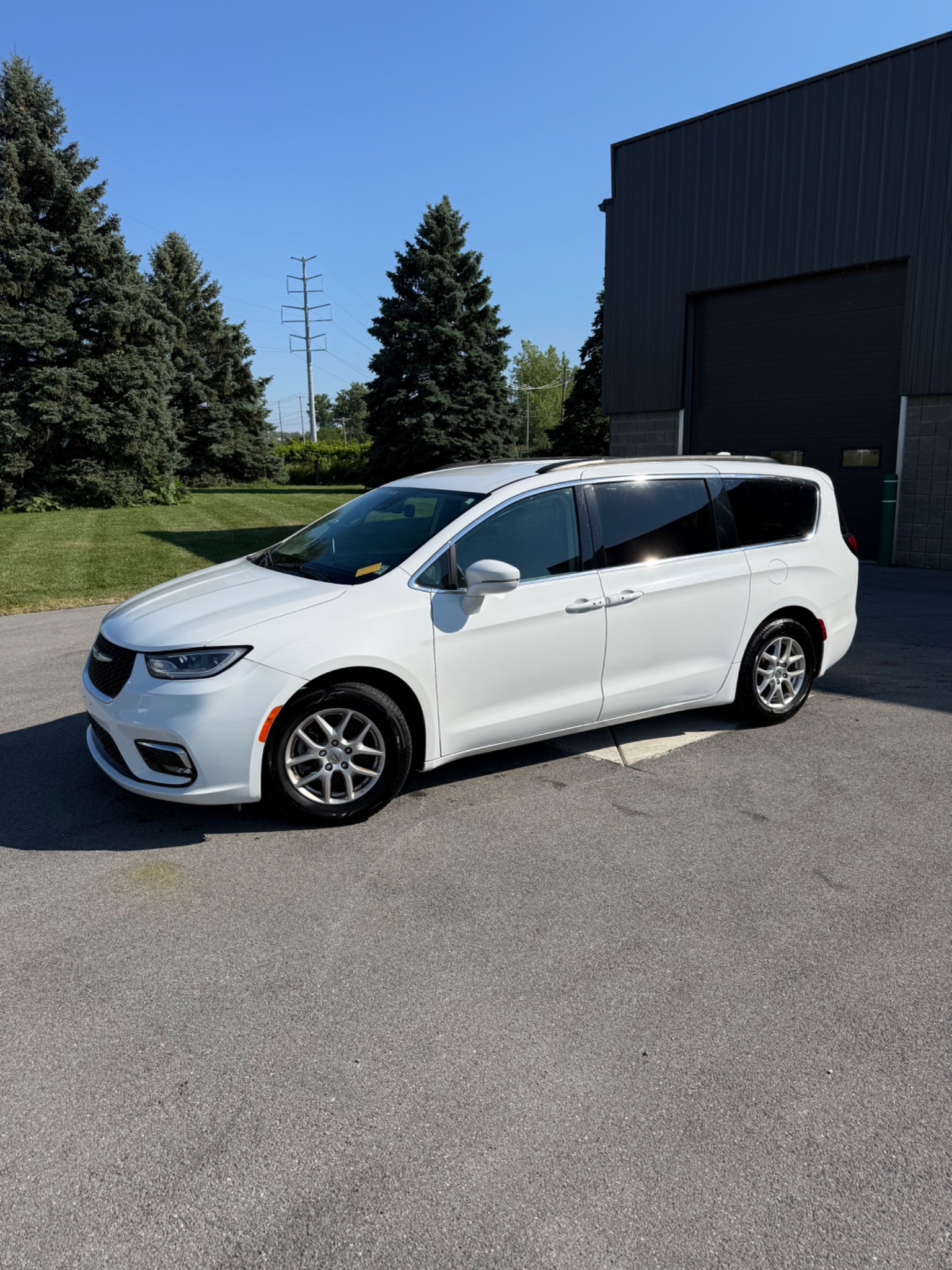
The owner-supplied photograph accompanying this article shows our white 2022 Chrysler Pacifica Touring L in dry weather. As listed on November 24, 2026, it has front-wheel drive, 86,650 miles, and an asking price of $20,000. The asking price and availability are subject to change.
Its front-wheel-drive configuration makes it a useful example of why family-vehicle shopping should include more than a drivetrain filter. The photo does not establish tire type or winter readiness. Before deciding whether it fits your routine, confirm the installed tires, current condition, and any preparation needed. If AWD is essential for your search, say so at the outset rather than assuming every version of a model has it.
Budget for the vehicle and its preparation
Compare the purchase with the cost of any needed tire replacement, mounting, and maintenance. Obtain vehicle-specific quotes instead of relying on a generic winter-tire estimate. If you plan a separate wheel-and-tire set, confirm fitment and storage arrangements before buying it. The right setup depends on the exact vehicle, not just its make.
Equipment also does not replace careful driving. NHTSA advises slowing down on slick or snow-covered roads and increasing following distance to allow more time to stop. Keep travel plans flexible when conditions make a trip unsafe.
Give us a useful winter vehicle brief
Tell RPM your budget, typical route, passenger needs, required drivetrain, and whether you already own a suitable winter wheel-and-tire set. Include the features you need for everyday use, not just cold weather. That information helps make your vehicle search more focused.
Browse our current inventory, request personalized vehicle finding, or contact RPM Automotive Advisors to discuss what you are looking for. Based in Buffalo and serving nationwide, we buy, sell, and find all types of vehicles. Everyday to Exotic. We Find. We Buy. We Sell.
Ready to Take the Next Step?
We're Here to Help.
Whether you're buying, selling, or just have questions — our team is available to help you navigate your next automotive decision.